Bulgarian Healthy Urban Environment Study – 5
Urban environment and cardiometabolic diseases
Download
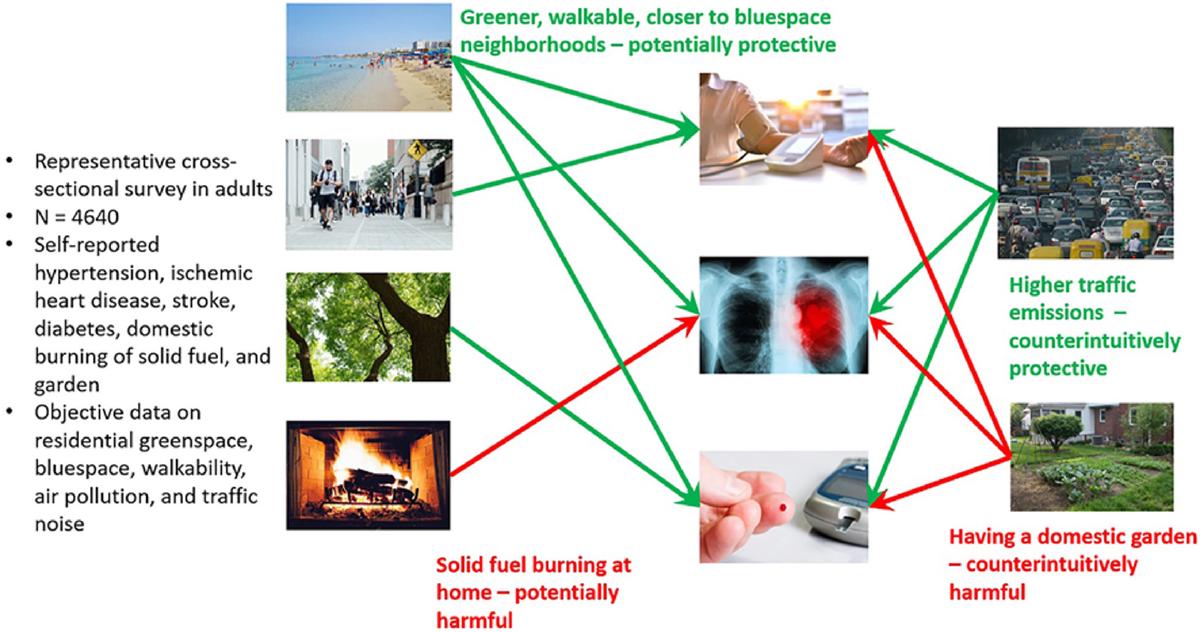
This study looked at how the environment where people live affects the prevalence of heart and metabolism-related diseases in the five biggest cities in Bulgaria. We used a sample of 4,640 adults from Sofia, Plovdiv, Varna, Burgas, and Ruse. The people in the study told us if they had any of the following: high blood pressure, ischemic heart disease, stroke, or diabetes. They also told us about their homes such as if they had a garden and if they burned wood or coal in their homes. We linked residential addresses to greenspace, bluespace, walkability, air pollution, and traffic noise exposure. Bluespace within 300 meters of people’s homes was linked to lower prevalence of hypertension and diabetes. The more walkable and tree-covered a neighborhood was, the lower the chances of someone having high blood pressure or diabetes, respectively. We found a link between using solid fuels for cooking and ischemic heart disease. There was also some evidence that aircraft noise was linked to both stroke and heart disease. We concluded that people living in urban neighborhoods that were more walkable, closer to bluespace, and greener had a lower prevalence of cardiometabolic diseases, while solid fuel burning was associated with a higher odds of cardiovascular diseases. The surprising links we found with some of these factors could be due to unaccounted for characteristics of the urban fabric. This study is one of the first to look at a region in Southeastern Europe that hasn’t been studied much. The results could help inform public discussions and provide evidence to support the use of urban design that promotes cardiometabolic health.