Bulgarian Healthy Urban Environment Study – 5
Greenspace exposure assessment
Download
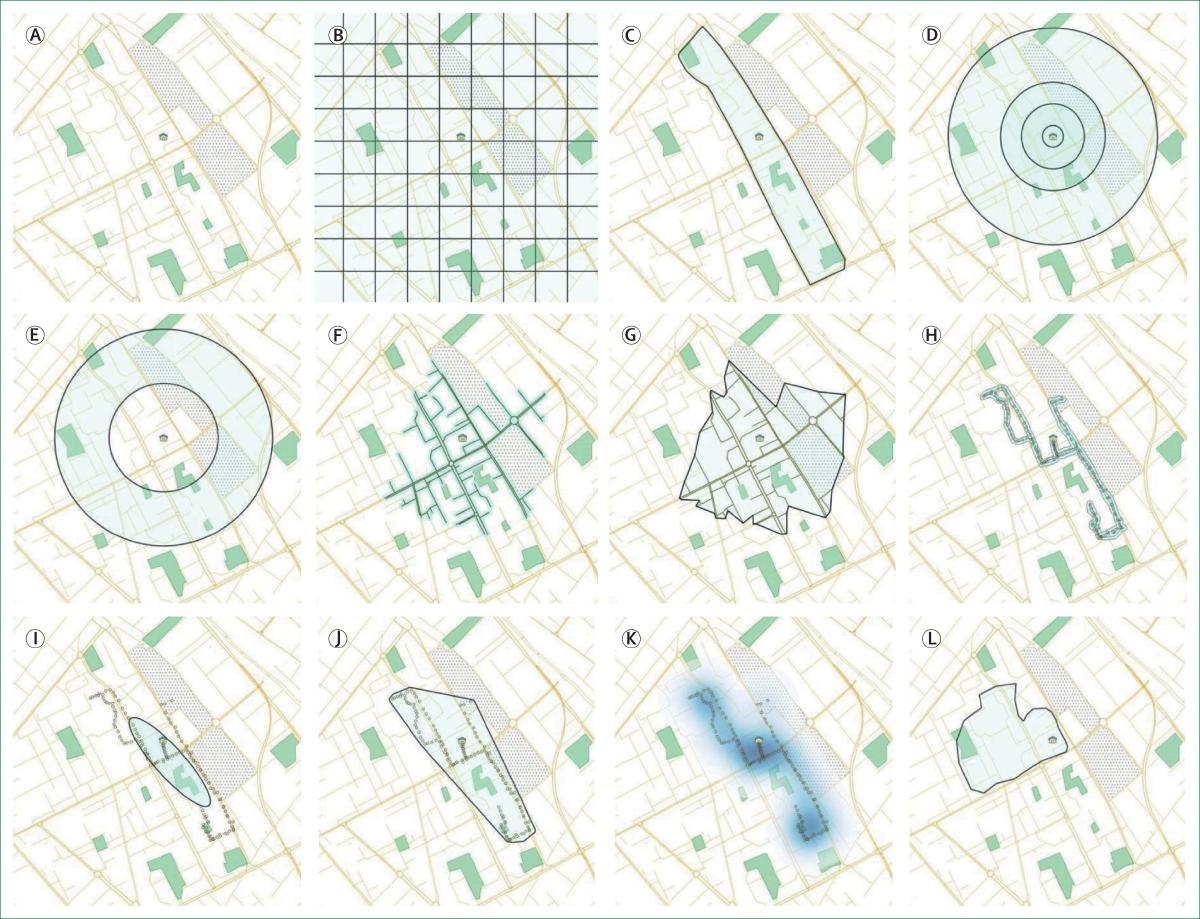
Green spaces can benefit people’s health in many ways. To study these effects, researchers often look at how much greenery is available within certain distances around where people live or spend time. Typically, concentric areas (called buffers) of a specific size are superimposed on the address locations. However, there is no clear set of rules for how to choose the buffer sizes and types, and different studies use different methods. This makes it hard to compare results and draw firm conclusions about how green spaces affect health. A group of experts from different fields came together to develop clearer guidance for choosing buffers in studies about green space and health. We reviewed the different ways buffers can be defined; for example, fixed areas around home addresses or more detailed methods that follow where people actually go during the day. We also looked at what factors should guide buffer choice, such as the type of health outcome being studied, how green space might influence it, who is being studied, the local context, and the type of data available. Based on this review, the expert panel recommends that buffer choices should always be based on a clear idea of how green space might affect health. When possible, studies should consider where people actually spend their time rather than just where they live, and they should test several buffer sizes. Overall, research on green space exposure should move away from one-size-fits-all methods and toward approaches that reflect people’s real experiences and surroundings. Researchers should also clearly explain and report how and why they chose their buffers so that studies can be compared more easily and results can be better combined.