Bulgarian Healthy Urban Environment Study – 5
Inequalities in nighttime light pollution
Download
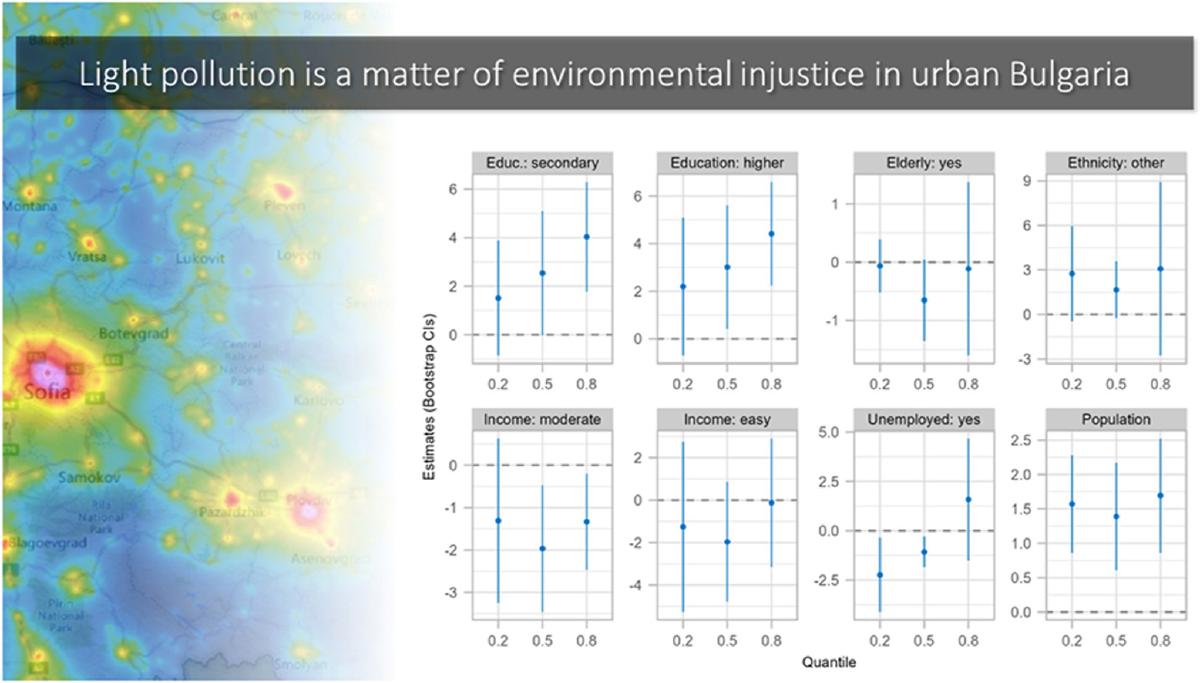
This study looks at how outdoor nighttime light is distributed among different groups of people living in the five largest Bulgarian cities. As cities continue to grow and get brighter at night due to artificial light, it is important to understand who is most affected by this environmental threat, especially since previous research suggests that nighttime light is related to human health. We used questionnaire data from more than 4,200 adults and measured the outdoor nighttime light at their homes using remote sensing. We applied statistical models to see if outdoor nighttime light was linked to factors like income, education, employment status, age, gender, and ethnicity. We found that people with higher education tended to live in areas with more nighttime light, while those with moderate incomes or who were unemployed experienced lower nighttime light. Surprisingly, the elderly and ethnic minorities in Bulgaria did not seem to face higher light exposure. Overall, our findings suggest that outdoor nighttime light exposure may represent an environmental justice issue in Bulgaria, but it’s not always the most disadvantaged groups that are most affected.